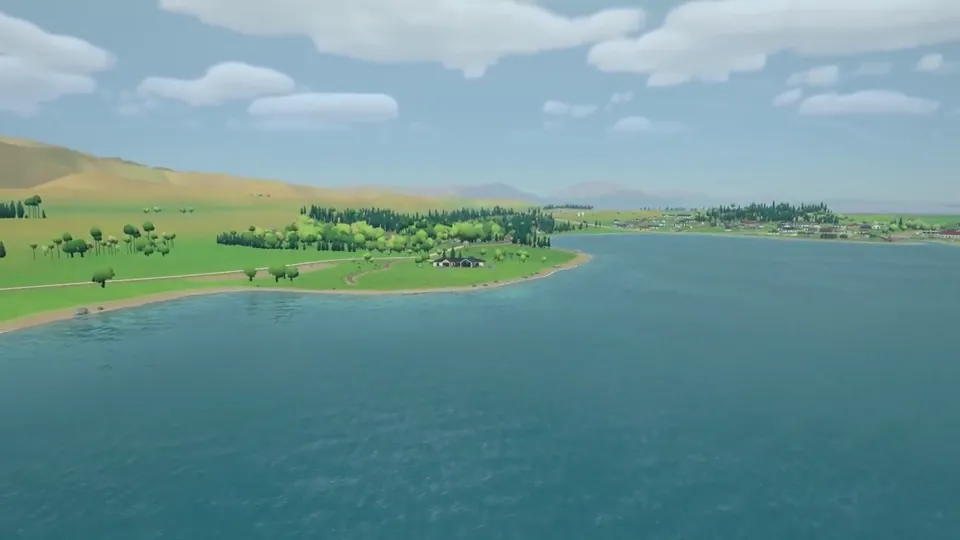
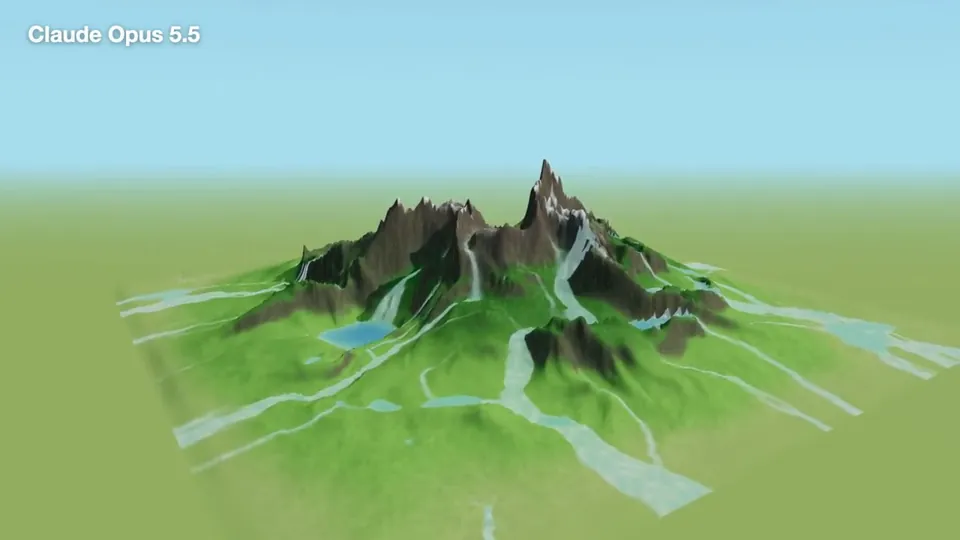
Claude Opus 5.5 on our AI coding benchmark: build a fully autonomous 3D water simulation from an empty repo - procedural mountains, rain, streams, lakes. TypeScript + Three.js, no physics engine.
One prompt, zero corrections, ~21 min. 23/23 tests green.
https://github.com/AiondaDotCom/ai-sim-benchmark
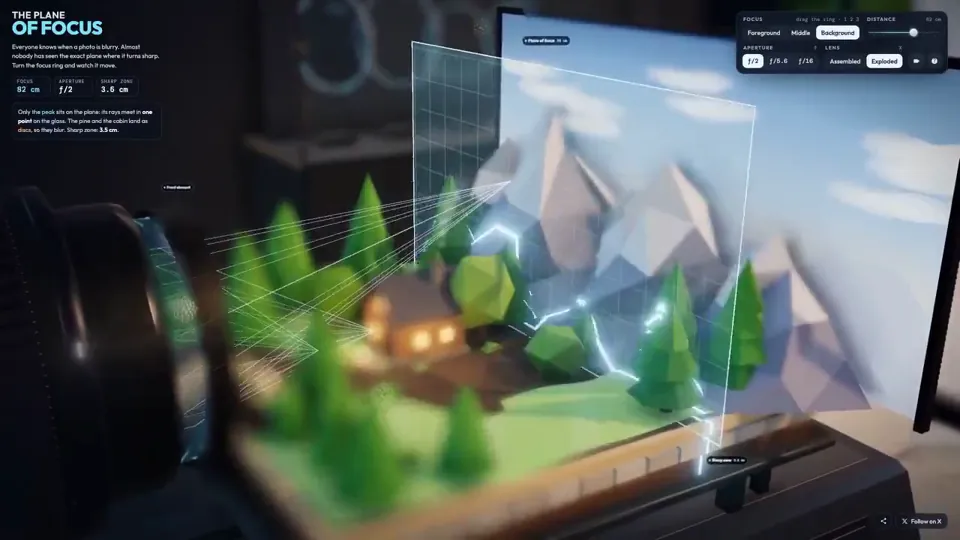
One prompt. One interactive camera lab. 🎥🔥
Claude Opus 5.5 generates a 3D experience where you can adjust the focus ring, move lens elements, shift the focal plane, and see real-time depth-of-field effects.
AI-generated interactive 3D is getting wild. 🤯
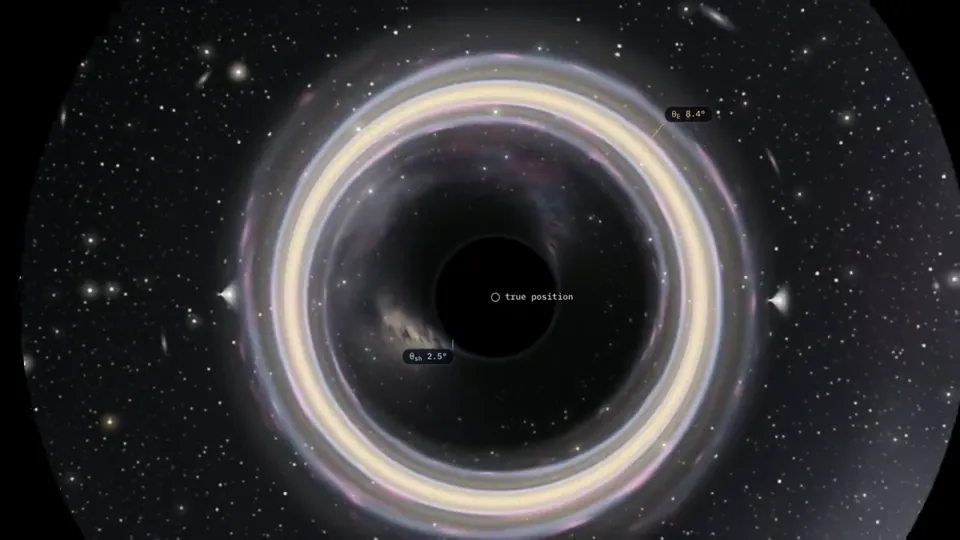
I asked Opus 5.5 to explain gravitational lensing by building an interactive black hole lab
One prompt for the first version, then a dynamic workflow to polish it for three rounds while I slept. This is what I woke up to: 5h 28m end to end, $90 at API prices
https://blackhole.voxyz.ai
Drag the black hole and the sky behind it bends into arcs, closing into a full ring when everything lines up
Each round ran 3 agents. Two reviewers each picked 9 to 10 issues and ranked them P0, P1, P2. The third one fixed them.
Round 1: 3D materials and lighting + UI and type
Round 2: camera motion and interaction + science-communication design
Round 3: a design director deciding whether it ships + visual QA and performance
Every P0 got fixed, the rest only if worth it. When the two reviewers disagreed, it picked one and wrote down why. It backed up before each round, checked screenshots after, and rolled back anything it couldn't fix.
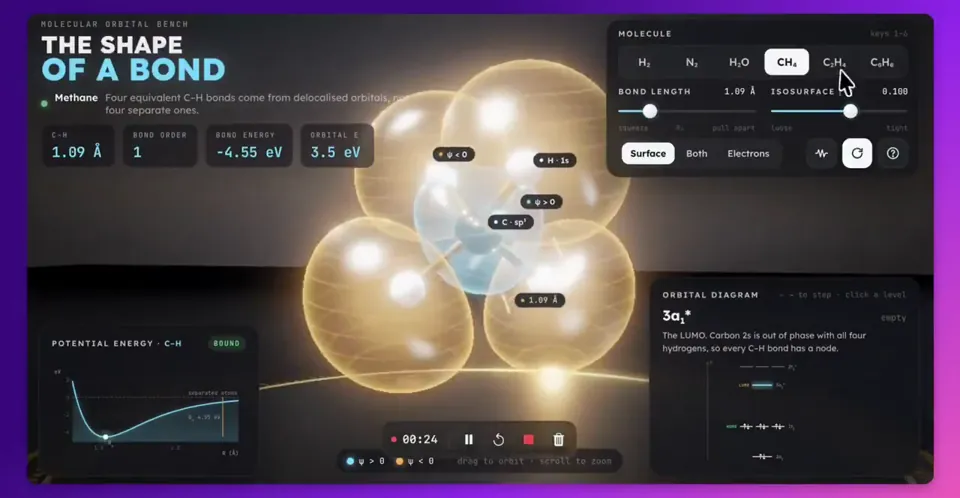
Opus 5.5 generated this simulation of molecular orbitals in about ~20 minutes. I had to prompt for some structures and resonance but I can see the promise of instant educational simulations for any advanced topic
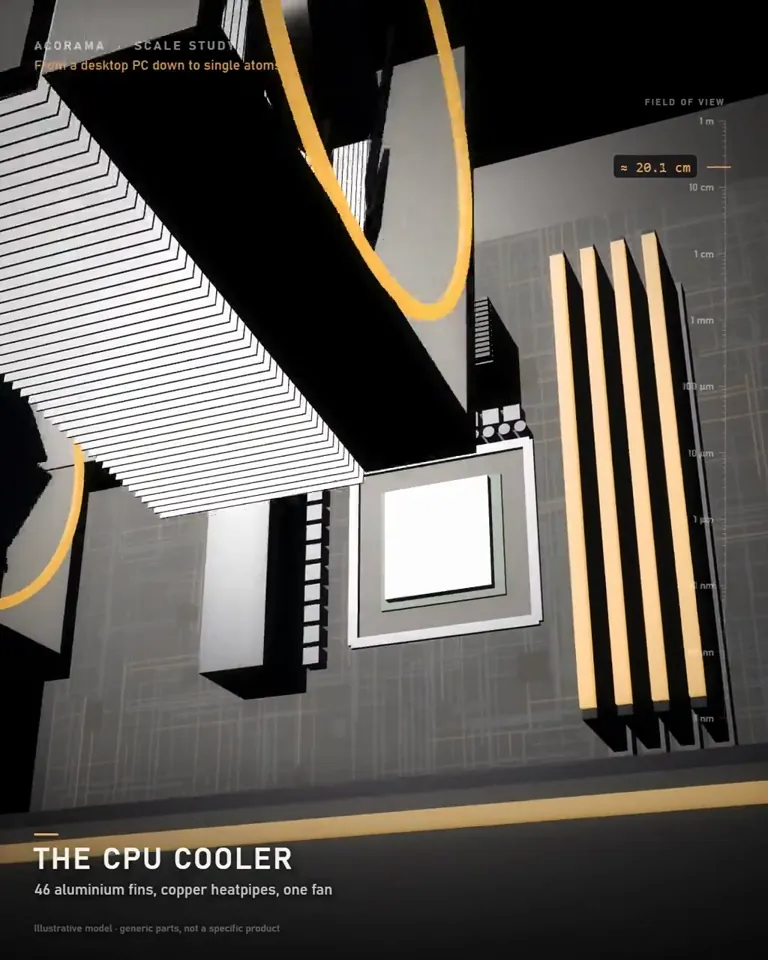
I TRIED MAKING A 3D MOTION GRAPHIC WITH CLAUDE OPUS 5.5. THIS IS WHAT CAME OUT.
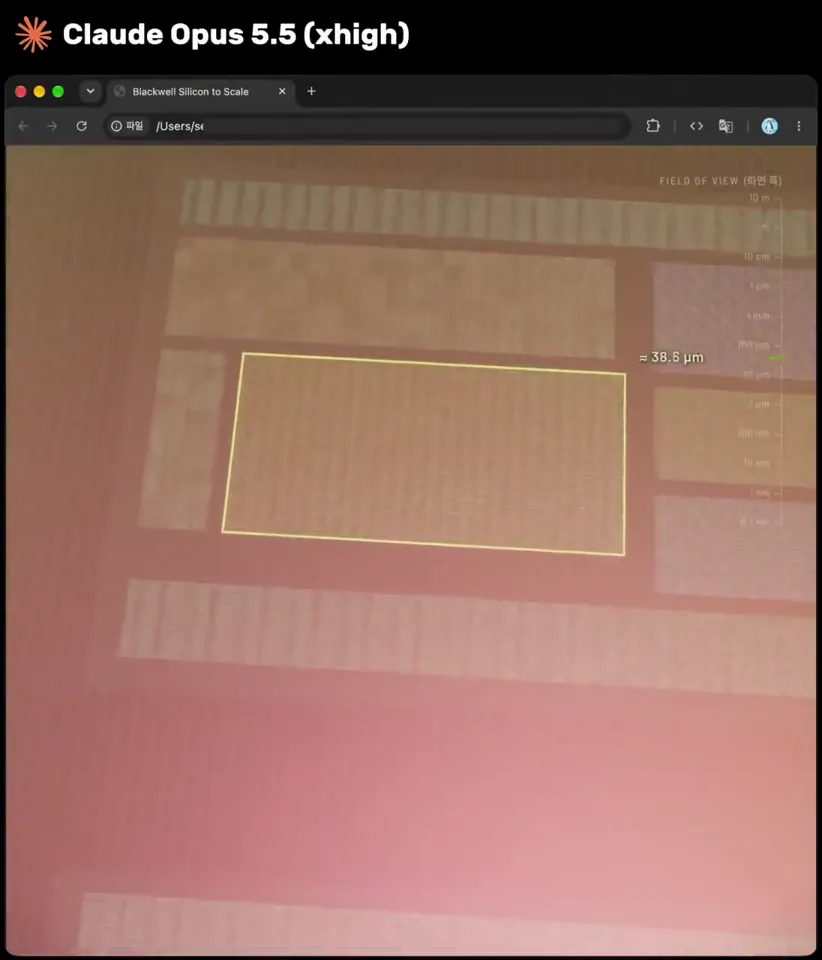
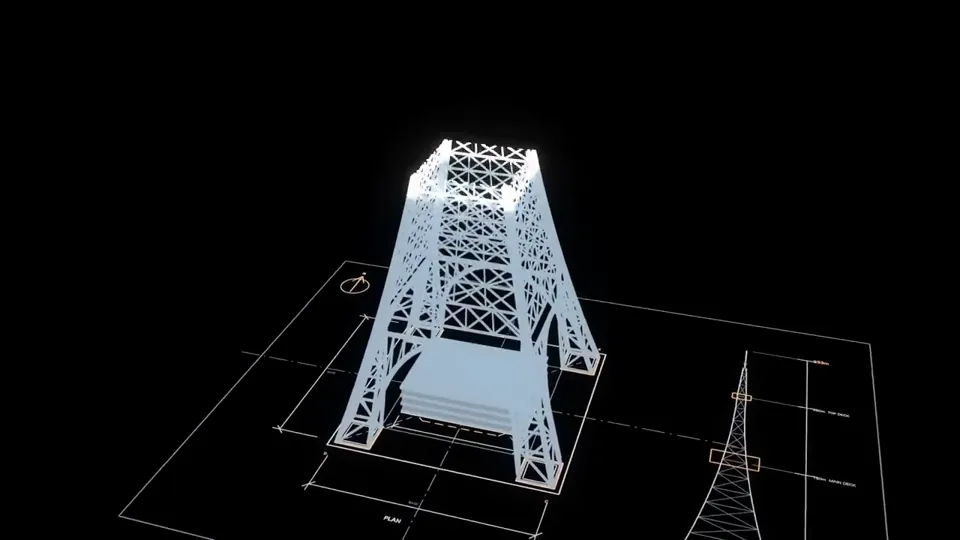
The idea was simple: start at my desk and don't stop zooming until we hit a single atom inside the CPU.
Opus 5.5 took it and just kept going.
Into the PC case. The cooler lifts off. The CPU under it. The metal lid comes off. Then the silicon die, one core, the copper wiring stacked on top, rows of logic cells, the fins and gates of the transistors…
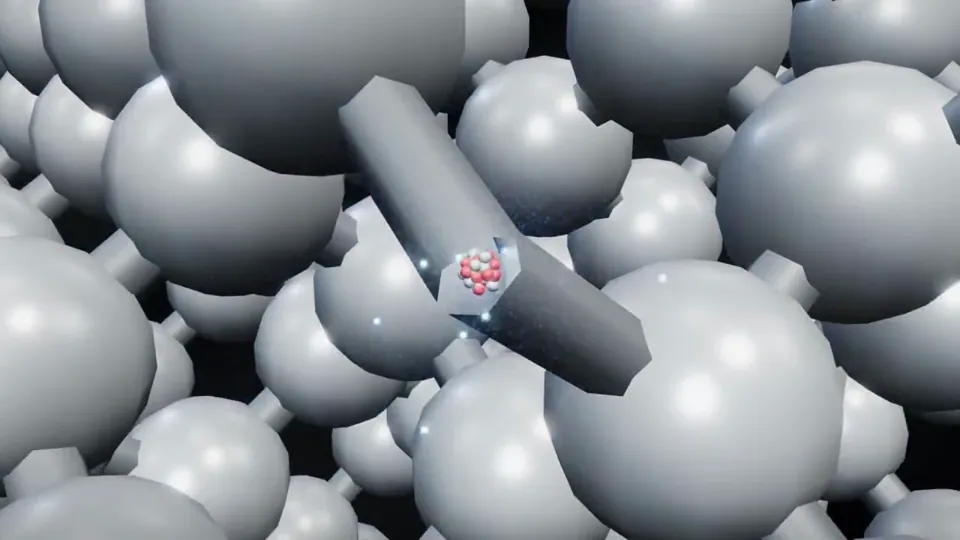
…all the way down to one silicon atom, bonded to its four neighbours.
One continuous shot, no cuts. The ruler on the right tracks the scale the whole time: from about a metre down to about 2 nanometres.
And the part that still gets me: every frame of this is 3D rendered right in a browser, from code. No Blender, no After Effects, no stock footage.
A year ago this would have been a studio job. Now it's one conversation.
Opus 5.5 is on another level.
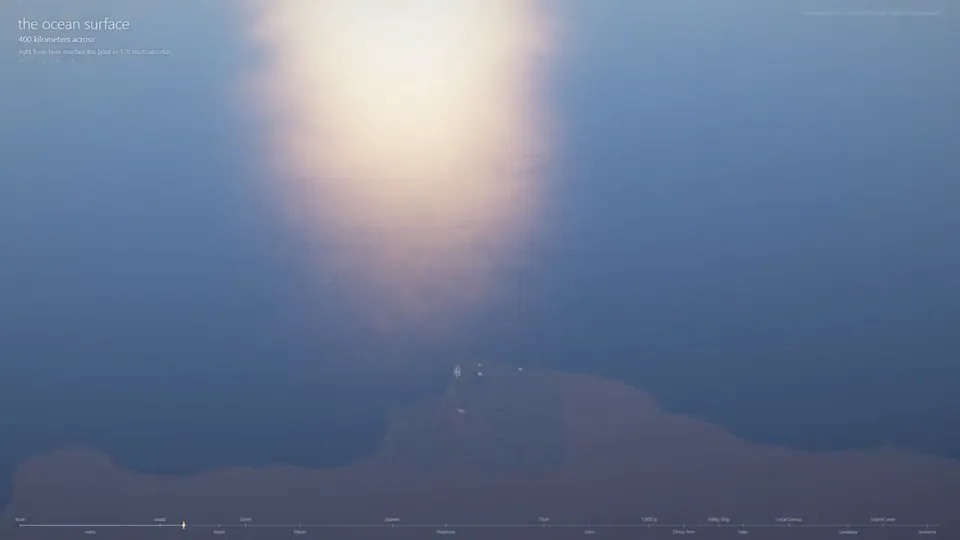
From Cabo da Roca to observable universe.
I gave opus 5.5 old prompt I prepared for Fable but I was not satisfied with the results. I asked model to create a cinematic film that zooms out from a hillside on Earth to the full observable universe using @threejs No external assets.
Time: ~3h
Output tokens: 662,769
Cache: 125.6M read, 2.0M written;
API-equivalent cost: about $54.52: output $13.26, cache reads $25.12, cache writes $16.14
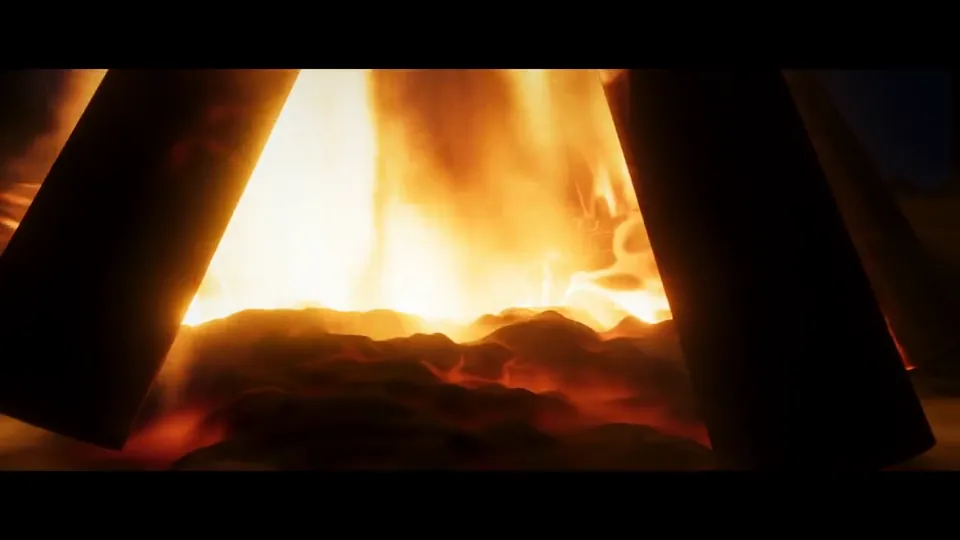
I asked opus 5.5 in @agnt_gg for the most realistic fire it could build using ONLY javascript.
It wrote a real 3D fluid simulation that runs on the GPU. The flame colors come from blackbody physics, the smoke is real volume, it runs at 96 fps in 1080p, and it critiqued its own renders about 40 times.
Then it shot a 38 second film of it. The sound comes from the fire itself. 🔥
Details:
- Nothing faked. The fire is actual simulated gas that burns, heats up, rises, and swirls. It gives off soot that glows, and the soot that escapes cools into smoke. Every frame is computed on the GPU.
- The AI graded its own work: render a frame, have a vision model pick it apart like a VFX supervisor, fix it, repeat. It caught a flame that kept dying, ring shaped artifacts on the ground, and coals that looked like cheese chips.
- The film isn't screen recorded. Each frame is rendered offline with scripted camera moves. The crackle and roar come from how brightly the fire burns in each frame.
- No Blender, no stock footage, no sound library. One HTML file, one conversation.
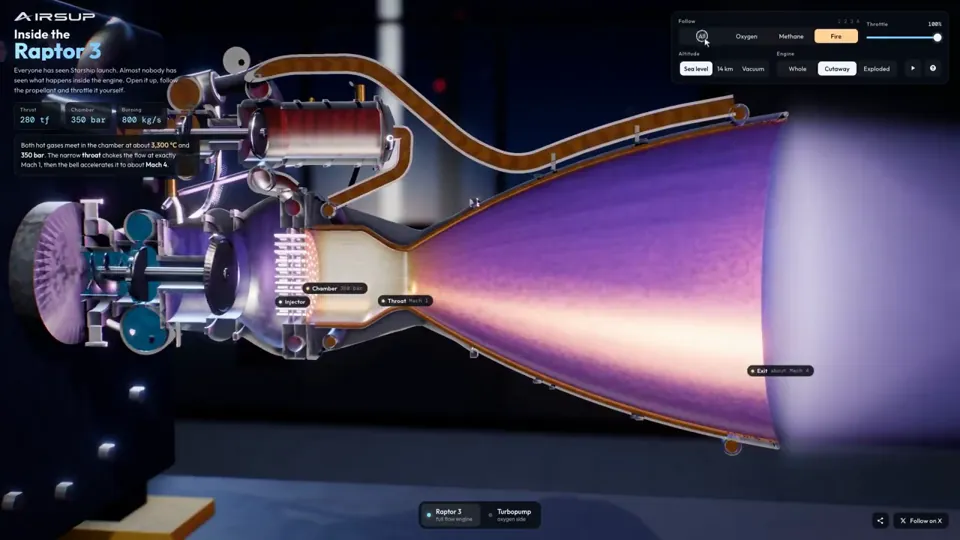
I asked Claude Opus 5.5 to explain how a rocket engine works by building an interactive Raptor 3 you can take apart in your browser.
Cut it open, follow the oxygen and the methane through both turbopumps, then throttle it and watch the shock diamonds move.
http://airsup.ai/rocket-engine
Opus 5.5 just turned a smartphone into a 20-second trip from glass to atoms.
It starts on the phone, dives through the motherboard and chip, then keeps going through the semiconductor structure until you’re basically staring at the atomic scale.
This is the kind of 3D shot that normally looks like a whole studio touched it.
Instead, Opus 5.5 built the sequence.
That’s fucking ridiculous.
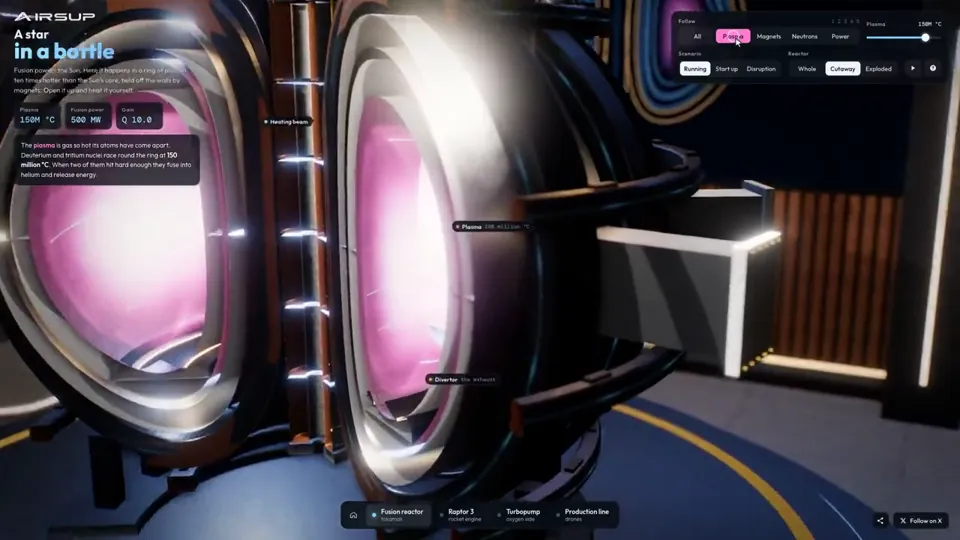
I asked Claude Opus 5.5 to explain how a fusion reactor works by building one you can take apart in your browser.
Drag the plasma from 15 million °C, the heat of the Sun's core, to 150 million and watch a city light up.
https://airsup.ai/lab
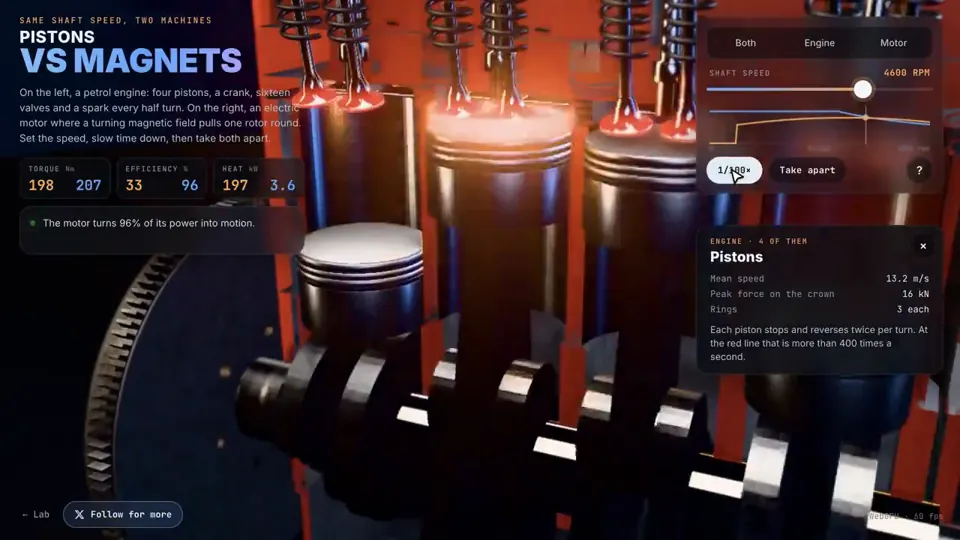
I asked Opus 5.5 again for an engine you can take apart in the browser
Pistons against magnets at the same shaft speed. Push the RPM, open the cylinders, slow time down to 1/10
Under 15 minutes, and it did not even move the usage meter on my Max plan. The first experiment took half an hour, this one reused the framework the earlier ones built
This is a screen recording, the real thing runs live in your browser
Next I want to find where it breaks, so a game is coming
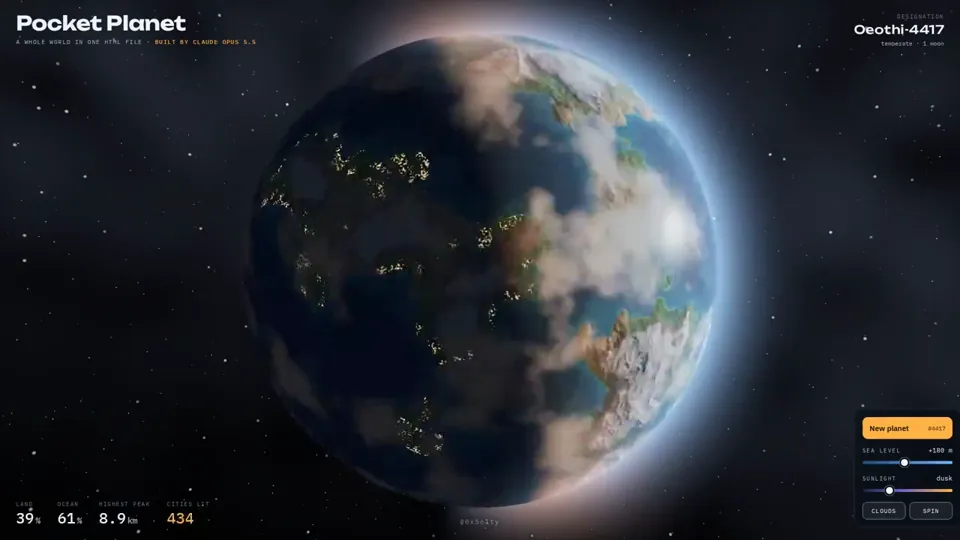
i asked opus 5.5 to build me a planet.
not a picture of a planet. a whole planet.
it wrote a single html file. no libraries, no images, no 3d models. every ocean, every mountain and every city light is math, generated live in your browser.
then i started playing with it.
drag it and it spins. raise the sea level and watch continents drown. move the sun and watch the cities switch on at night.
hit "new planet" and it invents a new world. it even names it.
a year ago this was a semester project for a graphics student.
now it's a prompt.
Claude Opus 5.5 is absurdly good at 3D.
I reran one of my recent 3D experiments with Claude Opus 5.5.
Same prompt, same references, same real-world scene I had previously built with GPT-6 Astra.
The result was much better than I expected.
Put simply, for this specific use case, Claude Opus 5.5 was a clear win for me.
The biggest differences for me were instruction following and taste.
With the same references, Opus 5.5 got much closer to the Zelda Breath of the Wild-style look I was aiming for.
The layout felt more intentional.
It picked better camera angles.
Asset placement made more sense.
And I spent much less time fixing basic mistakes.
In my Astra version, I had to repeatedly correct things like tree roots not touching the ground, rough geometry being used where proper assets already existed, or objects being placed in ways that just looked wrong.
Opus 5.5 got much more of this right on its own.
The interesting part for me is that I have almost zero real 3D skills.
I mostly give references, look at the result, explain what feels wrong, and keep iterating.
With better instruction following and visual judgment, that loop becomes dramatically easier.
Still plenty to improve, especially indoors.
Next test is whether I can recreate the interior of the house with the same level of quality.
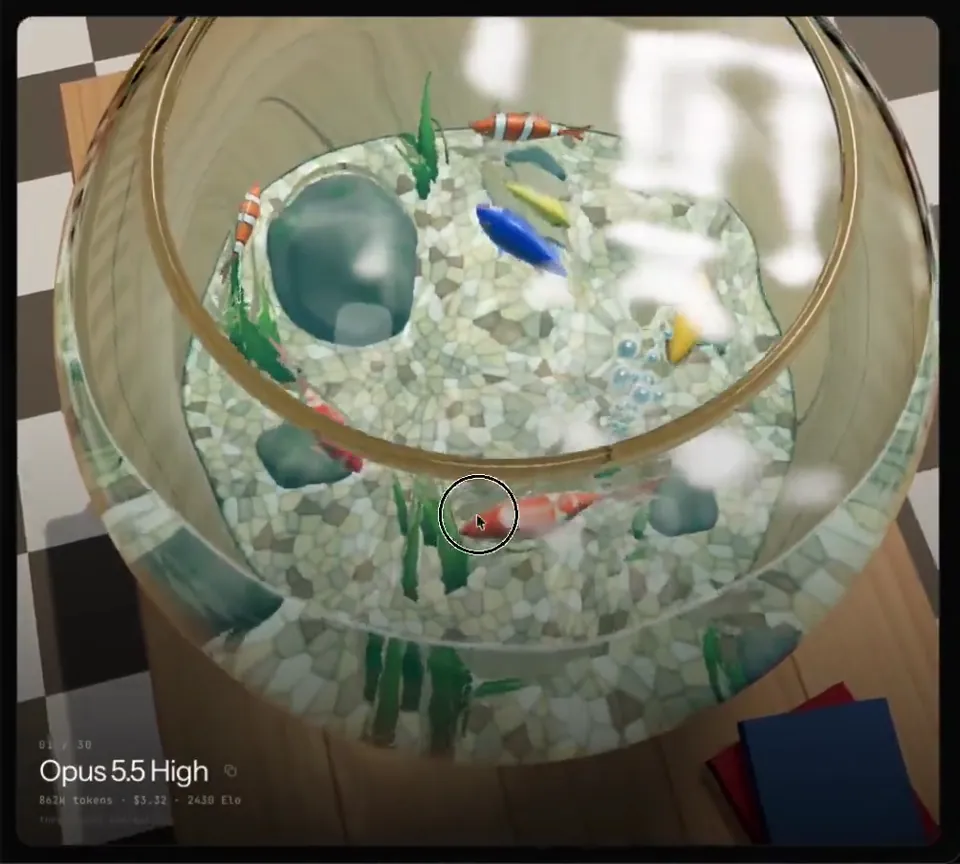
Opus 5.5 does a great job in eval of GLSL (OpenGL Shading Language) in threejs.
The prompt here is roughly. A fishbowl with reflection, refraction and water caustics.
Check it out yourself! And compare it to other models
https://threejseval.com/gallery?eval=fishtank
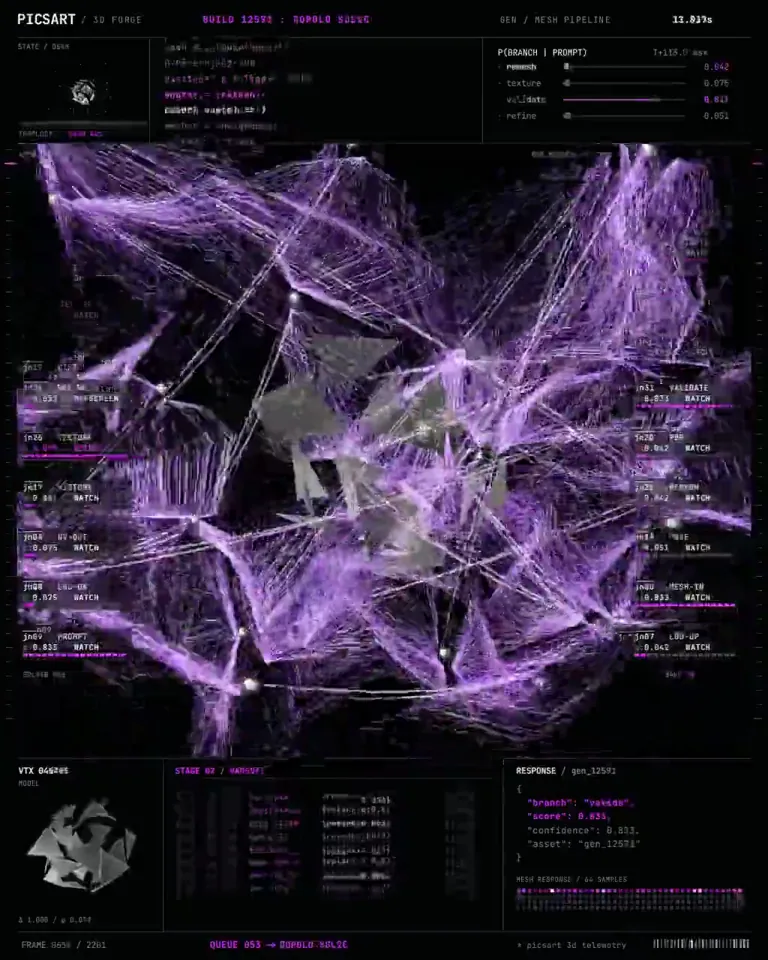
Opus 5.5 turned one sentence into a 3D system that opens in Blender, rigged, textured and ready to animate.
It does not render the object. It constructs it, part by part, the way a modeller would if they had a week.
> PARSE - the sentence becomes a parts list with real dimensions, nothing implied
> MASS - each part built as clean geometry, quads only, no sculpted mush
> RIG - joints and pivots placed where the object physically bends
> SKIN - materials assigned per surface, scale and roughness set separately
> PACK - exported with a named hierarchy, so a human can edit one part
Image models stop at the render. What you get is a photograph of a thing that does not exist as a thing.
That gap appears the second someone wants to move an arm, swap a material, or send it to a printer.
Rigging is what nobody automates. Without pivots you have a statue, and a statue cannot be a system.
Topology beats detail every time. A dense mesh looks stunning in a screenshot and folds the moment it deforms.
Names carry through the whole export. Every part, joint and material reads the way a person would label it.
Studios burn days on modelling and cleanup before anyone gets to the creative part of the job.
The prompt format and what each stage returns are laid out underneath.
Claude Opus 5.5 یه انیمیشن 3D دیوونهکننده ساخته
از دیتاسنتر شروع میشه، وارد سرور میشه، کارت گرافیک رو باز میکنه، داخل چیپ میره، از مدار و ترانزیستور رد میشه و تا اتم سیلیکون میرسه.
همهش توی یک فایل HTML واحد اجرا میشه و حدود ۱ ساعت طول کشیده.
Opus 5.5 is mind boggling.
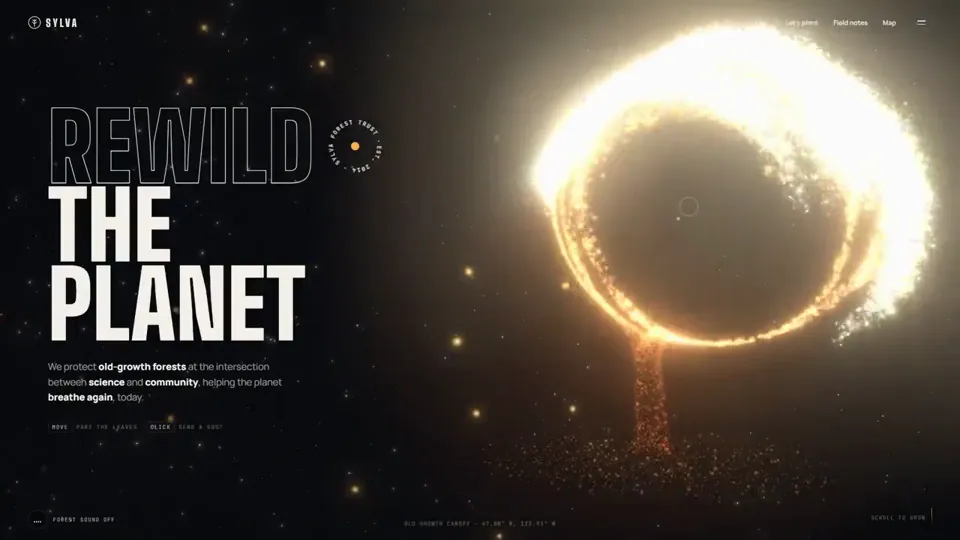
It created this 3D website from just one prompt.
Told it to create a website for forest conservation agency with pinterest post as reference for 3D animation.
It one shotted into a single html file.
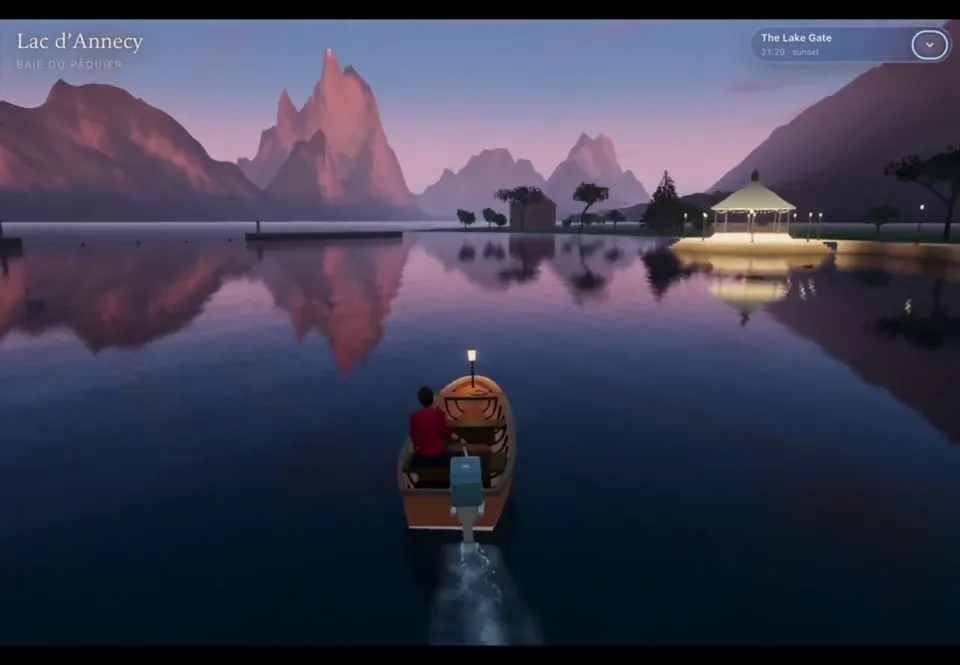
I wanted to see if beautiful destinations could become playable 3D experiences. Annecy, France became the prototype: a boat journey through canals, bridges, waterfront, and the mountain lake, built with Claude Opus 5.5 using Three.js + TSL.
I trimmed the navigation footage for the sake of keeping the video short and the post below below has a slightly longer version. The whole workflow behind this is simple:-
- Explained the concept to Opus and asked it to list some ideas.
- Shortlisted one and asked it to generate a prompt, with tech stack directions.
- Thats it, needed few iterations and is still a work in progress with few issues needing ironing.
- The audio effects were added by Opus itself.
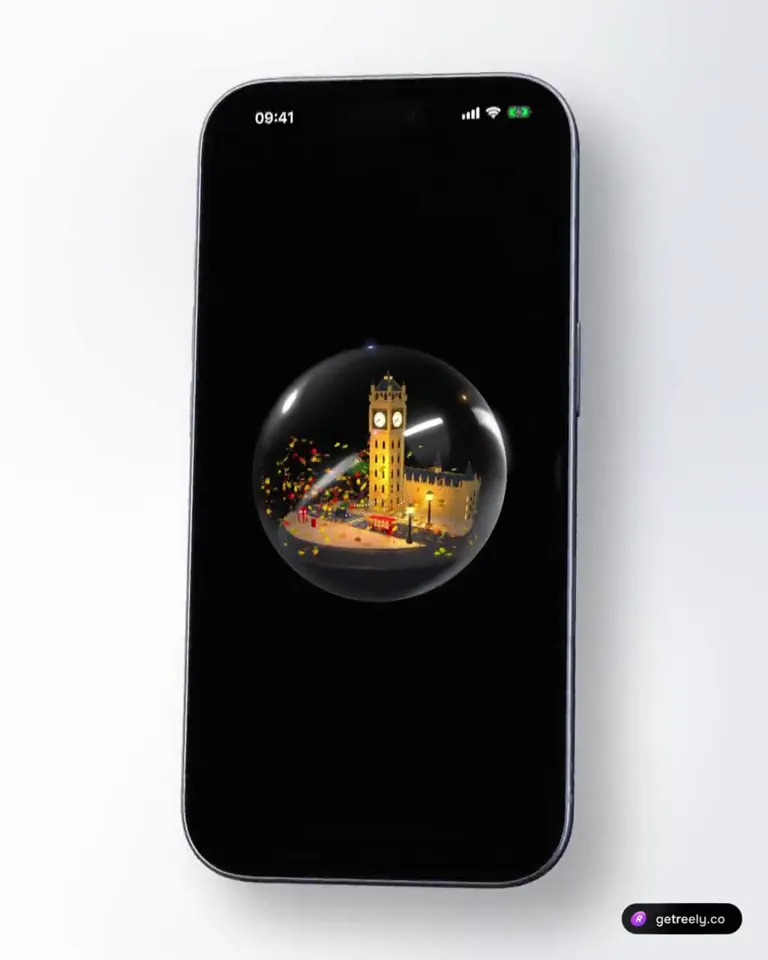
Opus 5.5 put London in a snow globe
🕰 Elizabeth Tower with lit clock faces
🚌 Red double-decker
🚕 Black cab at a zebra crossing
☎️ Phone box
🍂 Leaves that swirl when you shake the phone
~700 lines of Swift. No 3D files.
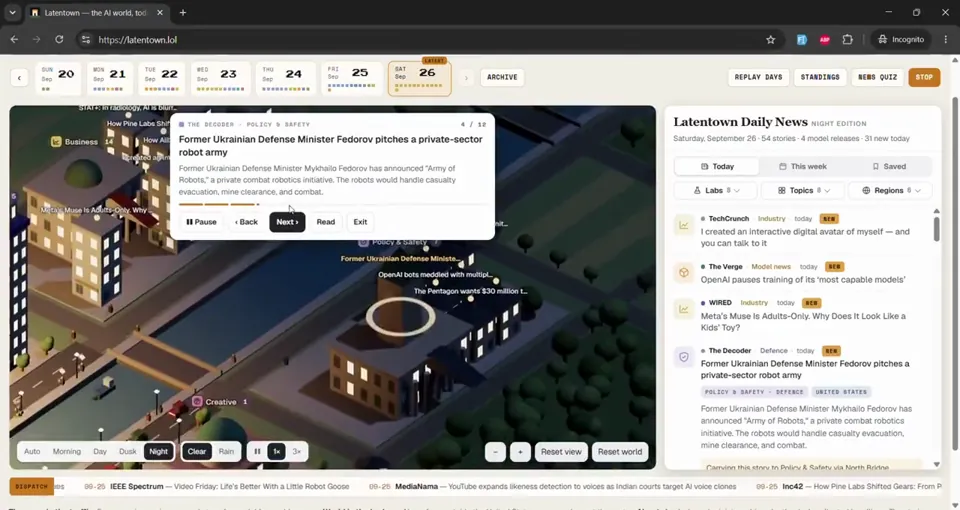
Latentown just went 3D 🏙️
The pixel town grew into a living city of AI news. Every story is a building, every lab has a tower, and couriers carry the day's news across the river.
Built over a weekend with Claude Code + Opus 5.5 and three.js.
https://latentown.lol
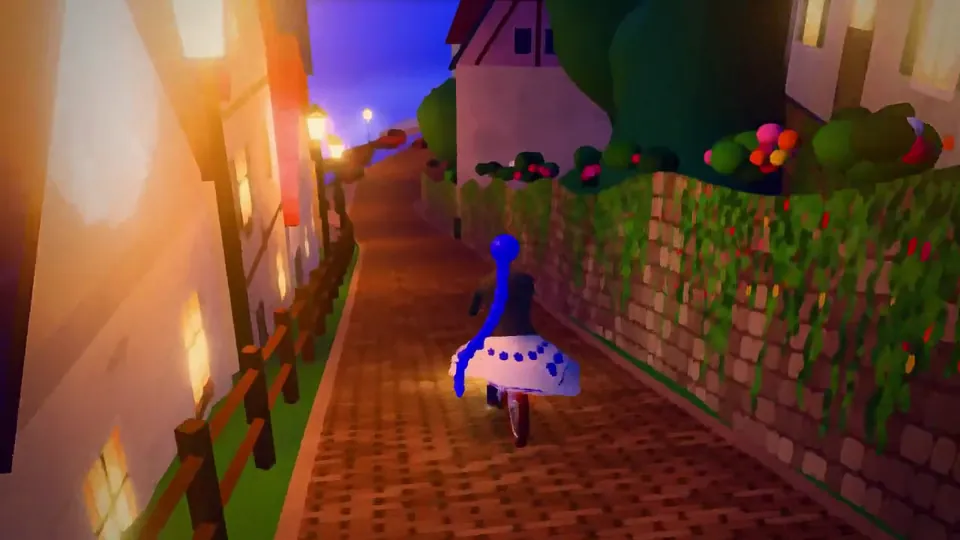
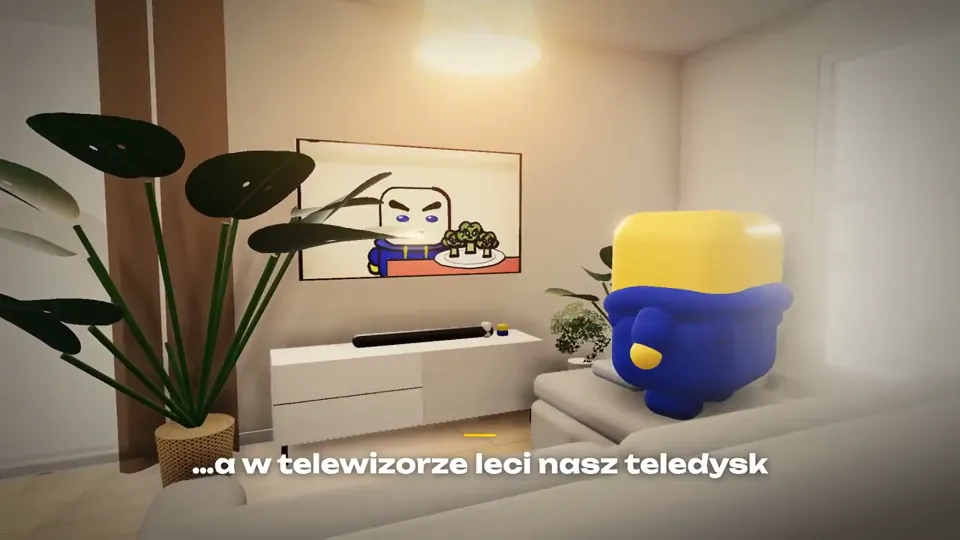
Rok temu próbowałem zrobić grę 3D z Opusem 4.1 - zrzut ekranu, jak to wtedy wyglądało, wrzucę w komentarzu.
Zobaczcie, jak szybko to wszystko idzie do przodu. Minęło tylko 12 miesięcy, a dziś wygląda to tak. Całość zbudowana z modelem Opus 5.5.
https://kreatio.pl/brokul
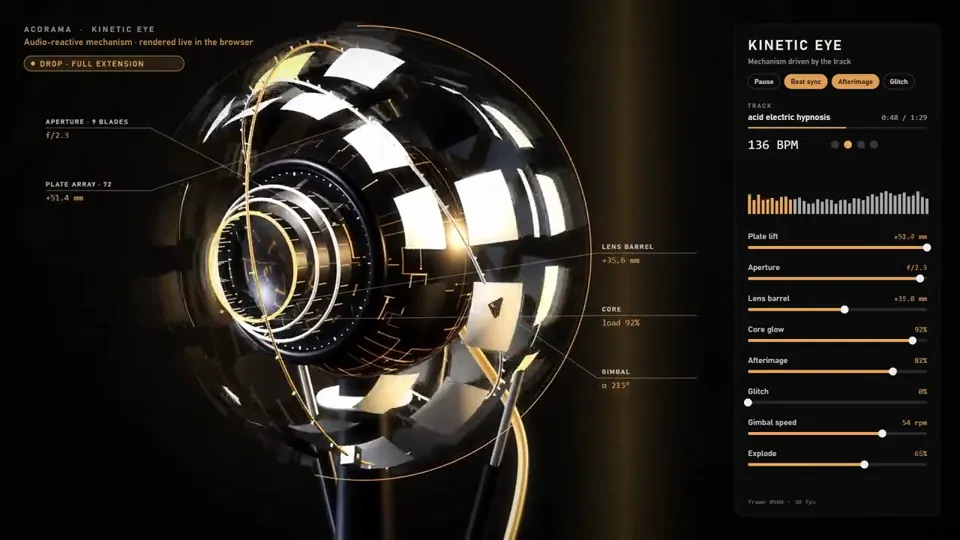
CLAUDE OPUS 5.5 MADE ME A MAGIC EYE.
It doesn't just look around. It listens.
72 plates wrapped around a mechanical eyeball, a 9-blade iris, a lens that slides out when the bass hits, two rings orbiting it like it's its own little planet.
Play a track and it comes alive. Every kick flips the plates open. The bass pushes the lens forward. The highs light up the glowing core inside.
When the song drops into the breakdown, the eye closes and goes quiet, like it's thinking. Then the drop hits and it blows wide open.
Opus 5.5 listened to the track first, found the tempo, the breakdown and the drop, and built the whole thing around it. Even the panel on the right is live: every slider moves with the music.
All 3D, all code, rendered right in a browser.
Turn the sound on.
I updated my game Higher on @spawn with Opus 5.5 and Savi with just only one prompt
This is the result. Multiplayer game with portals to different worlds
Play here: https://www.spawn.co/@chucky/higher/play
Opus 5.5 is seriously impressive🤯
I gave Lovable a detailed prompt for a game I wanted to build, and it used Opus 5.5 to turn it into what you see in the video.
Five hours of cooking. One-shotted.
Day 7 of making a game every day until I hit 1 million followers.
Driftward: Oregon Trail in space, four mini games. Can you make it to the other side of the galaxy alive? Made in a single prompt with Opus 5.5 and Fifth Door.
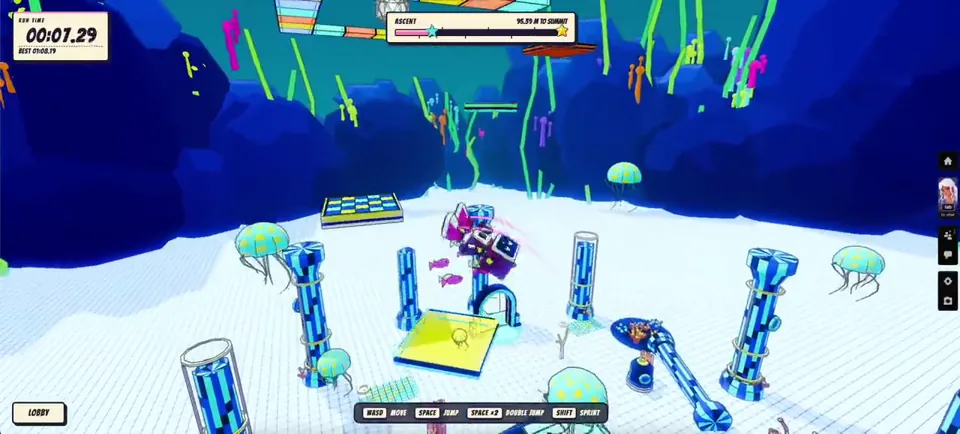
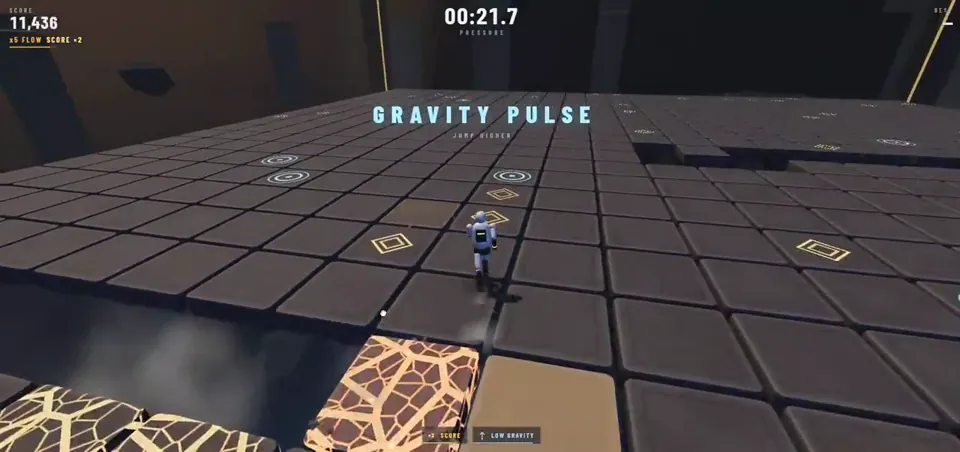
I made a 3D survival game in one prompt with Opus 5.5
Survive 60 seconds.
Every tile you step on cracks... then it falls.
Race your own ghost, chase near-misses, watch the arena rebuild itself when you fail.
Most people don't make it past 30s 👇
https://claude.ai/artifact/D3kjdvMpvrGgTCcxDTTDvP
This is Dope!
Claude Opus 5.5 is on fire 🔥
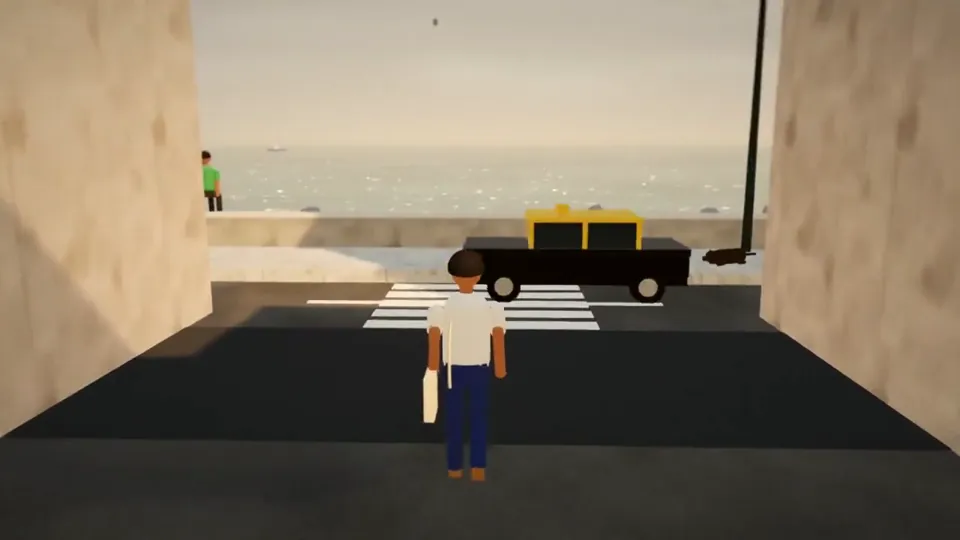
One prompt → a 30s video-game walk through Mumbai, built entirely in code.
No AI video. No 3D assets. No stock audio.
1,850 lines. 900 frames. 30+ sounds from pure math.
Every pigeon, puddle and kaali-peeli, made by code.
Mumbai, compiled. 🇮🇳

 0:30
0:30